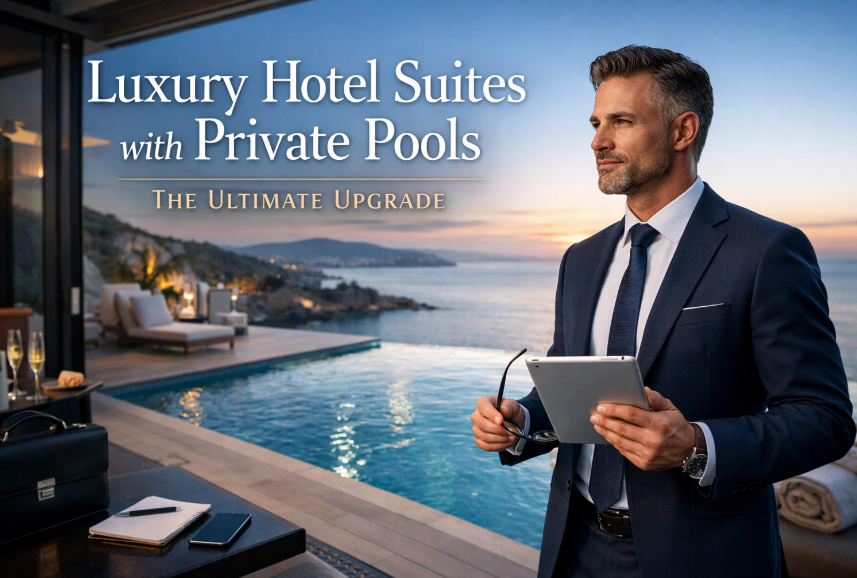
Why Private-Pool Suites Define Modern Luxury Hospitality
Luxury hospitality has shifted toward privacy-led value, and private-pool suites sit at the center of that shift. Instead of sharing one pool with hundreds of guests, the traveler secures a personal water space that stays available all day. That availability increases perceived control, and control is a key driver of premium satisfaction. In practical terms, the suite eliminates crowd friction, noise exposure, and the “hunt” for loungers that can weaken a five-star experience. More importantly, it converts the accommodation into a villa-like environment, which strengthens the promise of exclusivity. In a market where luxury travelers pay for certainty, the private-pool suite delivers a clear contract: quiet, access, comfort, and discretion.
Beyond privacy, the experience economy shapes how guests evaluate luxury hotels and resorts. Modern buyers compare “moments” more than square meters, and a private pool creates more high-value moments per day. Morning swims become effortless rituals. Afternoon dips function as temperature regulation and stress relief. Evening floating supports calm, low-stimulation recovery. This is why private-pool suites align so well with high-intent luxury travel demand and high-value advertising segments such as premium resort bookings, honeymoon travel, executive leisure, and wellness vacations. Scarcity strengthens the product, too, because inventory remains limited in most luxury properties. As a result, a private-pool suite communicates status, lifestyle, and experience quality through one highly legible amenity.
Core Benefits of a Luxury Suite with a Private Pool
A private pool delivers measurable wellness benefits when the guest uses it as a daily routine rather than a novelty. Short hydrotherapy sessions can reduce muscle tension and support recovery after flights or excursions. Temperature regulation becomes easier, especially in hot destinations where heat fatigue can reduce enjoyment. Many travelers also use water time to support sleep quality, because quiet floating and reduced stimulation can lower perceived stress before bedtime. That combination—recovery, comfort, and routine—supports the broader concept of restorative travel, which dominates modern luxury positioning. For travelers who value performance, the private pool becomes a predictable recovery asset rather than an optional perk.
Lifestyle value adds another layer of justification for the upgrade. Couples gain uninterrupted privacy, which supports romance travel and honeymoon outcomes through exclusivity and controlled ambience. Families gain schedule flexibility because children can swim without crowded public pools, while parents supervise in a controlled environment. Executives gain time efficiency because the suite supports work breaks, decompression, and discreet leisure without moving through public resort zones. In each case, the pool expands the suite’s functional capacity, turning the room into a self-contained luxury product. This is precisely why private-pool suites convert well as a premium upsell: they reduce friction while increasing the frequency of “premium moments.”
What “Private Pool” Means in Luxury Hotel Marketing
In luxury marketing, “private pool” describes a spectrum of pool formats, and that spectrum determines real-world usability. Plunge pools often suit quick dips, cooling, and lounging, especially in humid climates. Infinity pools emphasize scenic value and prestige, and they often deliver strong perceived luxury because they frame the horizon or coastline. Lap-style pools, while less common in suites, provide functional fitness value and appeal to travelers who maintain structured routines. Each type creates a different experience profile, so selection should match intent. Heating matters if the destination cools at night or if the trip falls in shoulder season. Depth matters for comfort and family safety. Terrace ergonomics matter because lounging space can be as important as water space.
Marketing language can also mask compromises that reduce privacy performance. Terms like “semi-private,” “shared pool access,” or “pool terrace” can signal partial exclusivity. Sightlines from neighboring rooms can dilute discretion. Pathways near terraces can increase noise and visibility. A simple verification method reduces risk: review recent guest photos, request suite layout details, and ask direct questions about overlooking and exclusive pool assignment. A private-pool suite should protect privacy by design, not by assumption. When privacy is the core reason for the upgrade, structural separation becomes a value requirement, not a preference.
Best Destinations for Private-Pool Suite Value
Tropical and island resorts often deliver the highest private-pool ROI because climate supports frequent use and outdoor living. Warm evenings extend the usable hours of the pool, which increases daily value conversion. Resort design in these areas also favors indoor-outdoor flow, so the terrace becomes a functional living space rather than a decorative balcony. Ocean conditions can vary due to tides, currents, or marine life, and a private pool offers predictable swimming comfort. View premiums amplify the perceived value, especially when the suite frames sunsets, lagoons, or cliffside panoramas. In these contexts, the private pool does not compete with the destination; it enhances it by making the experience more controllable.
Desert resorts, cliffside properties, and city hotels can also deliver strong value through adaptation and scarcity. In desert environments, shade design and cooling strategies turn the pool into climate relief rather than an occasional feature. Cliffside pools create dramatic exclusivity through elevation and horizon views, strengthening the suite’s luxury differentiation. Urban luxury hotels often deploy rooftop plunge pools or micro-pools to sell rarity, since private pools remain unusual in dense city markets. That rarity creates a strong premium signal for executive travel, luxury staycations, and high-end celebratory trips. The consistent rule stays simple: the best destination for a private-pool suite is one where the pool stays usable, the privacy stays protected, and the setting stays distinctive.
Design Standards That Separate Good from Elite
Elite private-pool suites use architecture to increase comfort and reduce friction. The best designs create zones for swimming, dining, and lounging, which turns the terrace into a true outdoor living room. High-quality materials support safety and thermal comfort, especially under strong sun exposure. Anti-slip finishes reduce risk. Heat-resistant decking improves barefoot comfort. Strong drainage keeps the space clean and usable. Shade strategy also matters, because guests need both sun for warmth and shade for recovery. Wind management adds another performance layer, since wind can chill water and reduce terrace comfort. Designers often use screens, plants, and orientation to stabilize the space.
Technology and service design create premium differentiation when the hotel deploys them with discretion. Heated pools extend usability into cooler evenings and shoulder seasons. Smart lighting improves ambience control and supports nighttime safety. Climate controls inside the suite also matter, because indoor-outdoor transitions should feel seamless. Discreet service access protects privacy during housekeeping and in-suite dining. Premium properties often pair these suites with butler service, which reduces transaction costs across the stay through curated scheduling and faster response times. That combination—design performance plus service precision—creates the “effortless luxury” feel that high-end travelers actively seek.
Pricing Logic, Inclusions, and Value Signals
Private-pool suites command premium rates due to scarcity, view category, and operational intensity. Limited inventory concentrates demand in peak periods, which increases price volatility. View premiums further amplify rates, especially for oceanfront, cliffside, or overwater categories. Maintenance adds real costs, too, because private pools require frequent checks, cleaning, filtration, and sometimes heating energy. In premium decision-making, the key value question is utilization: how often will the guest use the pool, and how central is privacy to the trip? When daily use is likely, the premium often converts into strong experience value. When pool use is rare, the upgrade can become inefficient, even at a luxury level.
Inclusions often decide whether the premium feels justified. Breakfast, airport transfers, spa credits, club access, and priority reservations can raise the value of the overall package. Butler service can also improve the experience by reducing friction, especially for couples and executives who prioritize time efficiency. Hidden costs still require attention because resort fees, service charges, and mandatory meal plans can inflate total spend. Luxury travelers therefore benefit from a total-cost evaluation that includes taxes, transfers, dining, and activities. This approach supports rational luxury spending: it protects the budget while preserving the premium outcome.
How to Choose and Book the Right Private-Pool Suite
Selection should start with intent alignment, because the “best” private-pool suite differs by traveler profile. Romance travel typically benefits from maximum seclusion, minimal overlooking, and evening usability, which makes heating and privacy screening high priorities. Wellness travel benefits from quiet orientation, ergonomic lounging space, and balanced sun and shade. Family travel benefits from safe access steps, non-slip surfaces, and appropriate depth, alongside terrace layouts that support supervision. Business-leisure trips benefit from discreet access, strong service consistency, and terrace comfort that supports short recovery breaks. A checklist improves outcomes: confirm exclusivity, verify sightlines, check sun exposure, confirm heating policies, and ask about maintenance frequency.
Booking strategy can improve both value and certainty. Direct booking often increases access to loyalty benefits, member rates, and clearer communication on suite specifics. Shoulder seasons can reduce rates while preserving pleasant weather in many destinations, which increases ROI. Early booking can matter because private-pool inventory sells out quickly, especially in high-demand resorts. Written confirmation of key features—such as heating availability and privacy conditions—reduces risk and improves satisfaction. In premium travel, verification functions as value protection, and a private-pool suite deserves that rigor.
Safety, Hygiene, and Sustainability
Safety and hygiene standards should remain part of the luxury evaluation, because they shape comfort and trust. Reliable hotels maintain water quality through filtration, routine checks, and consistent cleaning schedules. Good terrace design also reduces risk through non-slip surfaces, clear step geometry, and adequate lighting for night use. Families should prioritize supervised-friendly layouts and ask about any safety barriers or gates. These factors protect the guest experience and preserve the “effortless” feel that defines premium hospitality. In practice, disciplined operations create cleaner pools, calmer stays, and higher perceived value.
Sustainability matters because private pools increase water and energy intensity, especially in water-stressed regions. Responsible luxury properties reduce waste with efficient filtration systems, heat pumps, pool covers, and climate-smart building design. Transparent stewardship policies and credible eco-certifications can signal serious operational commitment rather than superficial marketing. Guests can support responsible travel by choosing properties that align luxury with conservation. This alignment protects destination quality over time, which is essential for premium tourism markets. In this sense, sustainability strengthens luxury by protecting the environments that luxury travel depends on.
Conclusion
A luxury hotel suite with a private pool delivers an upgrade that guests can feel every day. Privacy, control, and comfort combine to create a villa-like experience within a resort system. Wellness routines become simpler because the pool stays accessible at the exact time the guest wants it. Romance travel gains discretion and uninterrupted ambience. Family travel gains flexibility and reduced crowd exposure. Executive travel gains time efficiency and calm recovery space. The most successful upgrade decisions match pool type, privacy performance, climate usability, and total-cost logic to the traveler’s goals. When these factors align, the private-pool suite becomes the ultimate luxury upgrade in both experience and value.
FAQs
1) Do private-pool suites deliver better value than standard luxury suites?
They often do when privacy and daily pool use matter, because the suite adds consistent wellness and exclusivity benefits.
2) What is the best way to verify true privacy in a private-pool suite?
Use recent guest photos, request a layout or category description, and confirm in writing that the pool is exclusive to the suite.
3) Which pool type is best for luxury travelers: plunge or infinity?
Plunge pools support quick relaxation and cooling, while infinity pools maximize view prestige and experiential luxury impact.
4) Are private pools typically heated in luxury resorts?
Heating varies widely, so travelers should confirm heating availability, seasonal policies, and any extra fees before booking.
5) What sustainability features should I look for in private-pool suites?
Efficient filtration, evaporation control, energy-efficient heating, and transparent water stewardship practices indicate more responsible luxury operations.
Read More