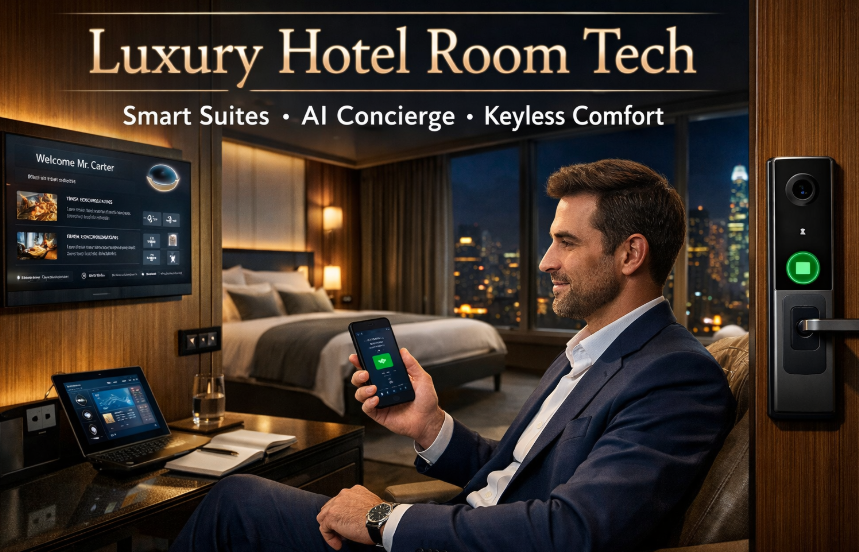
Why Luxury Hotel Room Technology Is the New Five-Star Standard
Luxury used to be loud. Crystal chandeliers. Gold accents. Marble everywhere. Now? Luxury is quiet. It’s the room that understands you before you speak. Luxury hotel room technology has become the new five-star standard because modern premium travelers want seamless comfort, instant personalization, and frictionless service without the “please wait” moments that kill the vibe. In a high-end hotel, every second matters, and smart suites remove the tiny hassles that feel huge when you’re paying premium pricing.
And here’s the punchline: guests don’t book “tech.” book control. book privacy. They book predictable comfort. They book the kind of luxury stay where the lighting scene fits your mood like a tailored suit, the temperature is perfect without touching a thermostat, and the AI concierge answers faster than room service can pick up. A luxury hotel room with smart tech isn’t a gimmick—it’s a modern expectation, like clean sheets and a quiet room, only smarter and more profitable.
Smart Suites 101: The Connected Luxury Room Experience
A smart suite is basically a luxury room with a brain. Not a “random tablet on the desk” brain—an integrated, connected, responsive system that ties together lighting, climate, entertainment, privacy settings, and service requests. The best luxury hotel smart suites feel like magic because everything works together. The worst ones feel like a toy store because nothing talks to anything else. So yes, execution matters. Big time.
In a premium hospitality experience, smart suite technology turns the room into a personalized sanctuary. You walk in, and the room recognizes your preferences, sets a welcoming scene, and cues the vibe you actually want—calm, energized, romantic, productive, or jet-lag survival mode. Think of it like stepping into a tailored lifestyle, not just a room. And in luxury travel, that emotional payoff is what makes guests leave five-star reviews—and what makes high-CPC advertisers chase this niche.
AI Concierge: Always-On, Always-Polished Service
AI concierge is the new “front desk in your pocket,” and it’s changing luxury hospitality the way elevators changed hotels: suddenly, the whole building feels faster. An AI-powered concierge can recommend restaurants, schedule spa appointments, handle late checkout requests, book private transfers, and answer frequently asked questions with VIP speed. The key word here is instant. In premium hotel service, speed is a luxury feature, not just an operational metric.
But the real flex is personalization. A luxury AI concierge doesn’t just answer questions—it anticipates needs. It suggests the best time for breakfast based on your schedule, offers a quiet corner table because you mentioned a business call, and remembers your pillow preference without making it weird. Done right, AI concierge technology feels like a polished assistant who never gets tired, never gets snippy, and never disappears when you need something at 2:00 AM.
Keyless Comfort: Mobile Keys, Biometric Access, and Privacy-First Entry
Keyless entry is the small change that feels like a big upgrade. keycards demagnetizing. No “oops I left it in the room.” No awkward front desk line when you just want to drop your bags and live your best life. With mobile key technology, premium guests unlock doors with a secure smartphone credential, walk straight to the elevator, and reach their suite without friction. It’s like skipping the line at a luxury lounge—quietly elite.
Then there’s biometric access, which is the “James Bond, but make it hospitality” version of entry. Face recognition and fingerprint access can add speed and security, especially for high-profile travelers who care about privacy-first luxury. And security isn’t just about locks—it’s about control. Smart locks can provide audit trails, anti-tampering alerts, and consent-based access for housekeeping. In luxury hotels, privacy is the ultimate status symbol, and keyless comfort is one of the cleanest ways to deliver it.
Smart Entertainment: Ultra-Premium Streaming, Audio, and In-Room Cinema
Entertainment is no longer “here’s a TV.” It’s “here’s your ecosystem.” A luxury hotel room should make streaming effortless: one-tap casting, fast Wi-Fi, and premium audio that doesn’t sound like a tin can in a shoebox. Smart entertainment upgrades are especially valuable for long-stay guests, business travelers, and high-end families who treat the suite like a temporary home.
The best smart suites deliver an in-room cinema feel: large high-resolution displays, smooth casting, crisp sound, and a lighting mode that dims like a real theater. Add soundproofing tech and spatial audio, and you’ve created a private experience worth paying extra for. It’s indulgence with a power button. Simple. Clean. Expensive—in the best way.
Luxury Sleep Tech: Beds That Think, Rooms That Heal
Luxury sleep tech is where hotels win loyalty. You can forgive a slow elevator. You can’t forgive a bad night’s sleep. Smart mattresses, sleep-tracking options, circadian lighting, and noise reduction features turn a luxury room into a recovery chamber. If travel is stress, sleep tech is the antidote. And in premium hospitality, that’s priceless.
Imagine this: the room dims the lights based on your bedtime, lowers the temperature for deep sleep, adjusts humidity for comfort, and runs a quiet air purification cycle in the background. No drama. No noise. Just a smoother body and a better morning. This is why high-end hotels lean into wellness technology—because “I slept like a baby” sells harder than any marketing slogan.
The Smart Bathroom: Heated Floors, Digital Showers, and Touchless Elegance
Bathrooms are emotional. A luxury bathroom is not just functional—it’s a mood. Digital showers with preset temperature memory, LED mirrors with adjustable lighting, heated floors, and touchless fixtures create that spa-like feeling that guests instantly notice. And because the bathroom is where people start and end their day, smart bathroom tech quietly shapes the entire guest experience.
Touchless luxury is also hygiene luxury. In a premium suite, automatic faucets, smart toilets, and touch-free dispensers don’t feel clinical—they feel elevated. Less touching, more comfort. Less hassle, more indulgence. It’s a small detail with a big psychological payoff, and luxury hospitality lives on psychological payoff.
Sustainability Tech That Feels Like Indulgence
Sustainability doesn’t have to look like sacrifice. In luxury hotels, the trick is to make eco-friendly tech feel like an upgrade, not a lecture. Smart energy management can reduce waste while keeping the room perfectly comfortable. Smart water systems can optimize usage without cutting the pressure. And guests? They get the good feeling of eco-luxury without losing the good life.
The best hotels do this invisibly: occupancy sensors that fine-tune climate control, intelligent lighting that adapts to natural daylight, and real-time energy optimization that doesn’t interrupt comfort. It’s green, but it’s also premium. The kind of premium that attracts high-value travelers—and the high-CPC brands that want them.
Privacy, Cybersecurity, and Trust: The Hidden Luxury
If luxury is control, cybersecurity is the lock on the vault. Smart hotel rooms collect data—preferences, devices, usage patterns—and premium guests want confidence that their data is protected. A true luxury hotel tech stack includes secure Wi-Fi, encrypted systems, device isolation, and clear privacy controls that respect consent. Trust is not optional. Trust is the product.
The highest-end suites offer “Private Mode” settings that reduce voice assistant listening, limit personalization, and prioritize device resets after checkout. Transparent data practices matter, especially for executives, celebrities, and privacy-conscious travelers. In smart hospitality, the invisible luxury is safety. And in premium travel, safety sells.
How Hotels Monetize Smart Luxury Without Feeling Salesy
Smart rooms can increase revenue without turning into a shopping cart. The secret is relevance. When the tech suggests late checkout because it notices a late flight, it feels helpful, not pushy. When the AI concierge offers a spa slot because your calendar shows a free afternoon, it feels like premium service, not marketing. Done right, smart upsells are just smart hospitality.
This is where premium monetization shines: curated upgrades, partner experiences, luxury brand collaborations, and targeted offers that fit the guest journey. The result is higher average daily rate, stronger loyalty, and better guest satisfaction. It’s not about selling more. It’s about selling smarter. Quietly.
What Guests Should Look For When Booking a Smart Luxury Room
Not all “smart rooms” are smart. Some are just… electronic. So if you’re booking a luxury hotel smart suite, look for a real tech ecosystem: mobile key, fast casting, responsive climate control, reliable Wi-Fi, and intuitive controls that don’t require a user manual. Luxury should feel simple, not complicated.
Also watch for red flags: outdated tablets, slow apps, inconsistent device pairing, and clunky “smart” features that feel like chores. If the room makes you work, it’s not luxury. The best smart suites disappear into the background. a great butler. Like great design. Like real comfort.
The Future of Luxury Hotel Tech
The future isn’t just smarter rooms—it’s predictive hospitality. Rooms that adjust before you ask. AI concierge systems that learn what you actually want, not what you clicked once. Emotion-aware lighting, wellness-first environments, and digital twin systems that help hotels keep everything working flawlessly. The goal is simple: less friction, more delight.
We’ll also see more robotics and automation behind the scenes—housekeeping logistics, inventory tracking, maintenance prediction—so guest-facing service becomes faster and smoother. Luxury tech will become less visible and more powerful. The best future luxury won’t scream “technology.” It’ll whisper, “Relax. I’ve got you.”
Conclusion
Luxury hotel room tech isn’t about gadgets. It’s about comfort that feels effortless, service that feels instant, and privacy that feels protected. Smart suites create personalized environments, AI concierge tools deliver frictionless support, and keyless comfort removes the tiny annoyances that ruin premium experiences. In the end, the real luxury is simple: the room works for you, not the other way around.
FAQs
1) What makes a hotel room a true “smart suite”?
A true smart suite uses integrated systems for lighting, climate, entertainment, and service requests, all working together seamlessly.
2) Is an AI concierge safe and private in luxury hotels?
In premium hotels, AI concierge systems should offer consent-based settings, encrypted connections, and privacy controls like “Private Mode.”
3) Do keyless hotel room locks work without internet?
Many mobile key systems use Bluetooth or stored credentials, so they can work even with weak internet, depending on the hotel setup.
4) What’s the biggest benefit of luxury sleep technology?
Better sleep quality through smart temperature control, circadian lighting, noise reduction, and clean air features that support recovery.
5) How can I tell if “smart room” tech is actually good before booking?
Check for mobile key support, casting/streaming capability, strong Wi-Fi reviews, and modern climate controls—avoid rooms with outdated tablets.
Read More